
At KTC, sustainability is deeply embedded in the Company’s business operations and integrated across every stage of the value chain. KTC is committed to aligning strategic initiatives with stakeholders’ interests while adhering to global sustainability standards, including the United Nations Sustainable Development Goals (UN SDGs). This commitment underscores the Company’s dedication to fostering long-term value creation, addressing key environmental, social, and governance challenges, and driving sustainable growth that benefits all stakeholders.
Sustainable Development Goals (SDGs)
1. NO POVERTY
1
NO POVERTY
Target 1.4
Provide equal rights to economic resources and access financial services
3. GOOD HRALTH AND WELL-BRING

3
GOOD HRALTHAND WELL-BRING
Target 3.d, 3.8, 3.9
Reduce health risk provide access to healthcare
4. QUALITY EDUCATION
4
QUALITY EDUCATION
Target 4.3, 4.4, 4.5, 4.7
Provide inclusive and equitable quality education and learning opportunities
5. GENDER EQUALITY
5
GENDER EQUALITY
Target 5.1, 5.5, 5.a
Promote gender equality without discrimination
7. AFFORDABLE AND CLEAN ENERGY
7
AFFORDABLE AND CLEAN ENERGY
Target 7.1
Ensure access to affordable, reliable, sustainable and clean energy
8. DECENT WORK AND ECONOMIC GROWTH
8
DECENT WORK AND ECONOMIC GROWTH
Target 8.3, 8.5, 8.7, 8.8
Support productive activities, decent job creation
and promote safe and secure working environments
9. INDUSTRY, INNOVATION AND INFRASTRUCTURE
9
INDUSTRY, INNOVATION AND INFRASTRUCTURE
Target 9.3
Support the development of innovative financial products to facilitate access to financial services.
10. REDUCED INEQUALITIES
10
REDUCED INEQUALITIES
Target 10.2, 10.
Empower equal opportunities and inclusion
12. RESPONSIBLE CONSUMPTION AND PRODUCTION
12
RESPONSIBLE CONSUMPTION AND PRODUCTION
Target 12.5
Ensure sustainable consumption and production, reduce waste generation
13. CLIMATE ACTION
13
CLIMATE ACTION
Target 13.3
Take action to mitigate climate change and impacts
16. PEACE, JUSTICE AND STRONG INSTITUTIONS
16
PEACE, JUSTICE AND STRONG INSTITUTIONS
Target 16.5, 16.6, 16.7
Develop effective, accountable and transparent institutions at all levels
Sustainability Development Structure
Board of Directors
- Approve the operational framework, policies, mission, and vision to maximize benefits for the company and its stakeholders
- Delegate responsibilities, oversee, and monitor the organization’s sustainability performance
- Ensure that the company complies with applicable laws, corporate regulations, and resolutions adopted by the shareholders’ meeting
- Appointing the Audit, Corporate Governance, and Sustainability Committee to oversee the sustainability development implementation
Audit, Corporate Governance, and Sustainability Committee
- Oversee, monitor, and provide guidance on the organization’s sustainability development
- Approve and endorse key sustainability material topics to address the needs of the company and its stakeholders.
- Review and approve sustainability performance results prior to their disclosure in the company’s sustainability report on a biannual basis
President & Chief Executive Officer
- Steer the organization toward sustainable growth by embedding its commitment to sustainability within strategic direction and business operations
- Provide oversight, monitor progress, and drive the attainment of established sustainability targets and performance indicators
Management & Sustainability Committee
- Establishes sustainability policies and operational guidelines that cover Environmental, Social, and Governance (ESG) aspects and integrates them into the core business strategy
- Reviews and approves new products and strategies, taking into consideration various risks and ESG impacts
- Appoints working groups or sub-committees to study sustainability issues and drive concrete implementation
- Support the execution of sustainability initiatives, including the allocation of resources in alignment with the company’s strategic objectives and operational plans
Management
- Establishes the department’s strategies, operational plans, and performance indicators to ensure alignment with the company’s sustainability strategy, including the continuous monitoring of implementation outcomes.
- Guiding the Sustainability Working Group, and ensuring integration of efforts to manage sustainability-related impacts and achieve sustainability metrics that were set forth by the Company
Sustainability Working Group
- The Sustainability Working Group comprises representatives from all departments to foster collaborative efforts in driving sustainability initiatives
- Ensuring effective performance and monitoring of sustainability metrics
- Responsible for studying national and international sustainability-related frameworks, facilitating cross-department discussions, and enhancing internal communications to raise awareness and understanding of sustainability
- Promote and support sustainability awareness, communication, and culture within the department.
Employees
- Acknowledge, fully understand, and be prepared to execute one’s responsibilities in accordance with the Company’s sustainability policies and guidelines
- Participate in sustainability-related activities, projects, or training organized by the company
- Promote and support an organizational culture that values Environmental, Social, and Governance (ESG) principles
Remark
The company has appointed the chief financial officer (CFO) to act as chief sustainability officer (CSO) and oversee sustainability operations. The role involves developing a clear sustainability strategy, incorporating it into core business planning, and monitoring performance to ensure that ongoing progress is aligned with both its financial goals and its environmental, social, and governance (ESG) objectives.
รายงานผล
การดำเนินการ
การดำเนินการ

กำหนดและกำกับดูแลนโยบาย กรอบการดำเนินการด้านความยั่งยืน
คณะ
กรรมการบริษัท
กรรมการบริษัท
คณะกรรมการตรวจสอบ
บรรษัทภิบาล และความยั่งยืน
บรรษัทภิบาล และความยั่งยืน
ประธานเจ้าหน้าที่บริหาร
คณะอนุกรรมการ
Management & Sustainability Committee
Management & Sustainability Committee
ผู้บริหาร
คณะทำงานความยั่งยืน
พนักงาน
คณะกรรมการบริษัท
- ตัดสินใจในประเด็นที่เป็นประโยชน์สูงสุดต่อบริษัทและผู้มีส่วนได้เสีย โดยการอนุมัติกรอบการดำเนินงาน นโยบาย พันธกิจ และวิสัยทัศน์
- มอบหมาย กำกับดูแล และติดตามผลการดำเนินงานด้านความยั่งยืนขององค์กร
- แต่งตั้งคณะกรรมการตรวจสอบกำกับดูแลกิจการความรับผิดชอบต่อสังคมและสิ่งแวดล้อม เพื่อกำกับดูแลการดำเนินงานด้านการพัฒนาความยั่งยืน
คณะกรรมการตรวจสอบ บรรษัทภิบาล และความยั่งยืน
- กำกับดูแลและให้ข้อเสนอแนะเกี่ยวกับการพัฒนาความยั่งยืนขององค์กร และรับรองผลการดำเนินงานที่ปรากฏในรายงานความยั่งยืนทุกครึ่งปี
ประธานเจ้าหน้าที่บริหาร
- ขับเคลื่อนองค์กรสู่การเติบโตอย่างยั่งยืนโดยผนวกความมุ่งมั่นด้านความยั่งยืนเข้ากับแนวทางกลยุทธ์และการดำเนินธุรกิจ
- กำกับดูแลและผลักดันเพื่อให้บรรลุเป้าหมายด้านความยั่งยืนที่ตั้งไว้
คณะอนุกรรมการ Management & Sustainability Committee
- กำหนดนโยบายและแนวทางการดำเนินงานด้านความยั่งยืน ให้ครอบคลุมทั้งสิ่งแวดล้อม สังคม และธรรมาภิบาล (ESG) รวมถึงผสานเข้ากับกลยุทธ์หลักของธุรกิจ
- พิจารณาและอนุมัติผลิตภัณฑ์และกลยุทธ์ใหม่ โดยคำนึงถึงความเสี่ยงรอบด้านและผลกระทบด้าน ESG
- แต่งตั้งคณะทำงานหรือคณะอนุกรรมการ เพื่อศึกษาประเด็นด้านความยั่งยืน และผลักดันการดำเนินงานให้เกิดผลอย่างเป็นรูปธรรม
ผู้บริหาร
- บูรณาการหลักการพัฒนาความยั่งยืนเข้าสู่ทุกส่วนขององค์กร
- ให้คำแนะนำแก่คณะทำงานความยั่งยืน พร้อมทั้งประสานความร่วมมือในการบริหารจัดการผลกระทบด้านความยั่งยืนเพื่อให้บรรลุเป้าหมายตามที่บริษัทกำหนด
คณะทำงานความยั่งยืน
- คณะทำงานความยั่งยืนประกอบด้วยตัวแทนจากทุกสายงานเพื่อส่งเสริมความร่วมมือในการขับเคลื่อนโครงการด้านความยั่งยืน
- รับรองการดำเนินงานที่มีประสิทธิภาพ การปฏิบัติงาน และการติดตามผลตัวชี้วัดด้านความยั่งยืน
- ศึกษากรอบแนวทางด้านความยั่งยืนทั้งในระดับประเทศและระดับสากล อำนวยความสะดวกในการหารือระหว่างหน่วยงานต่างๆ และเสริมสร้างการสื่อสารภายในองค์กรเพื่อเพิ่มความตระหนักรู้และความเข้าใจเกี่ยวกับความยั่งยืน
พนักงาน
- ปฏิบัติงานตามนโยบายและแนวทางด้านความยั่งยืนของบริษัทในบทบาทหน้าที่ของตนเอง
- มีส่วนร่วมในกิจกรรม โครงการ หรือการอบรมด้านความยั่งยืนที่บริษัทจัดขึ้น
- ส่งเสริมและสนับสนุนวัฒนธรรมองค์กรที่ให้ความสำคัญกับสิ่งแวดล้อม สังคม และธรรมาภิบาล (ESG)
Stakeholder Analysis and Engagement in the Business Value Chain
Stakeholder Analysis
The Company divides stakeholders into 10 groups according to their relevance to the Company’s business value chain. In 2022, the Company has considered and reviewed groups of stakeholders, which have not been changed from the original grouping and details are as follows:
Stakeholder Engagement
The guidelines for the treatment of stakeholders are clearly written in the Company’s Corporate Governance Policy and Code of Conduct, which are published on the intranet and the Company’s website. (https://www.ktc.co.th/en/sustainability-operations/economic-dimension) The Company also encourages all employees to pay attention to and empathize with stakeholders to be able to understand and engage their needs, expectations, and areas that stakeholders value via different channels and activities. Such information will be used for analyzing, defining, and developing guidelines for appropriate response or engagement between the Company and the stakeholders through the entire value chain throughout the year to reduce risks, while creating business opportunities that meet customers’ needs. Furthermore, the Company also provides various measures to take care of stakeholders during the COVID-19 outbreak.
THE DETAILS OF STAKEHOLDER ENGAGEMENT DETAILS ARE AS FOLLOWS: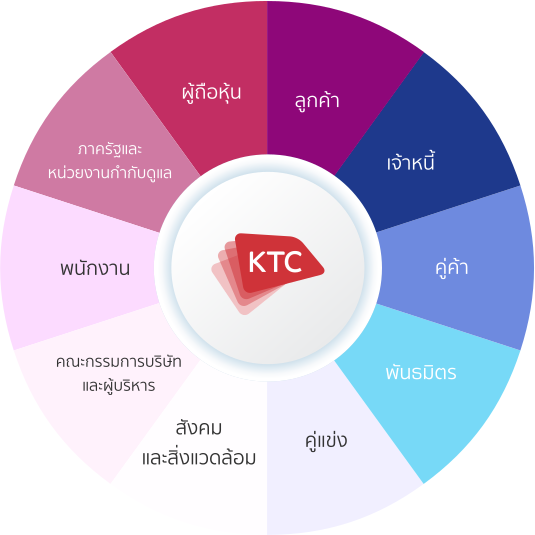
Identification of Sustainability Materiality Topics
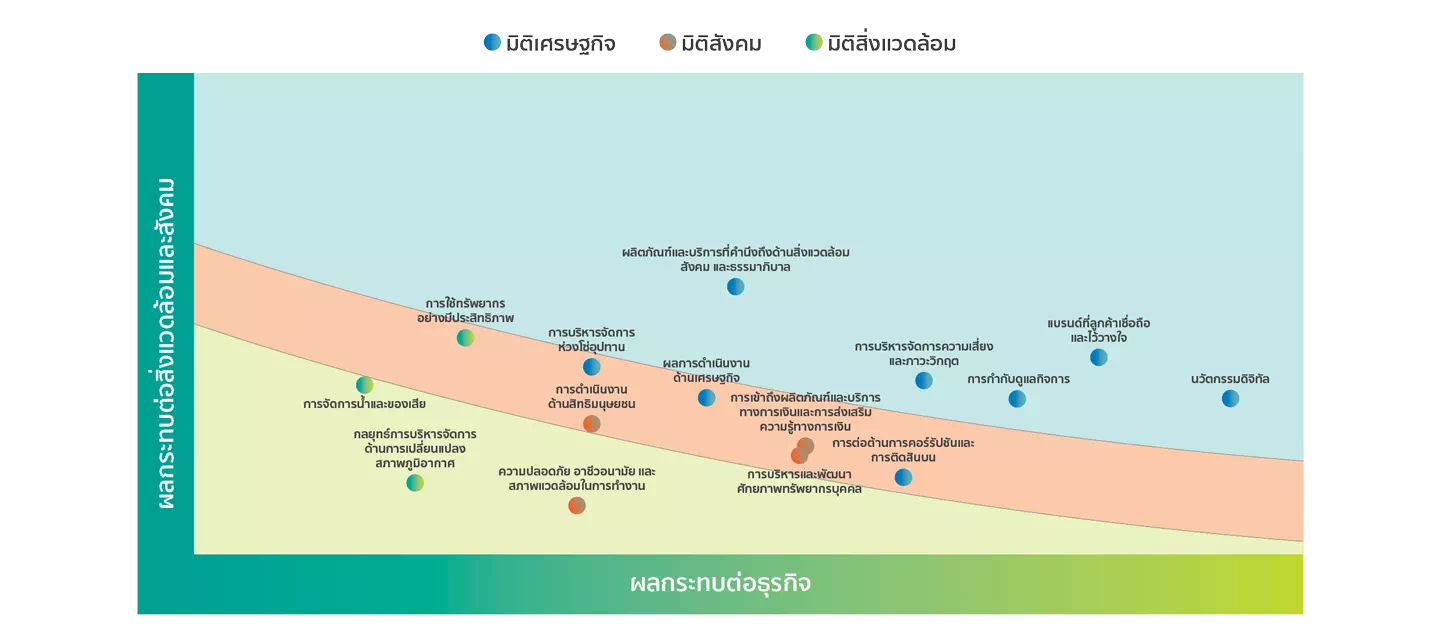
KTC conducts an annual materiality assessment to evaluate sustainability issues related to the Company’s business, covering environmental, social, and governance dimensions. The materiality assessment is performed based on the principle of Double Materiality of the European Union’s Corporate Sustainability Reporting Directive (CSRD) in accordance with the European Sustainability Reporting Standards and the Global Reporting Initiative (GRI) Standards 2021.
Materiality Assessment Process
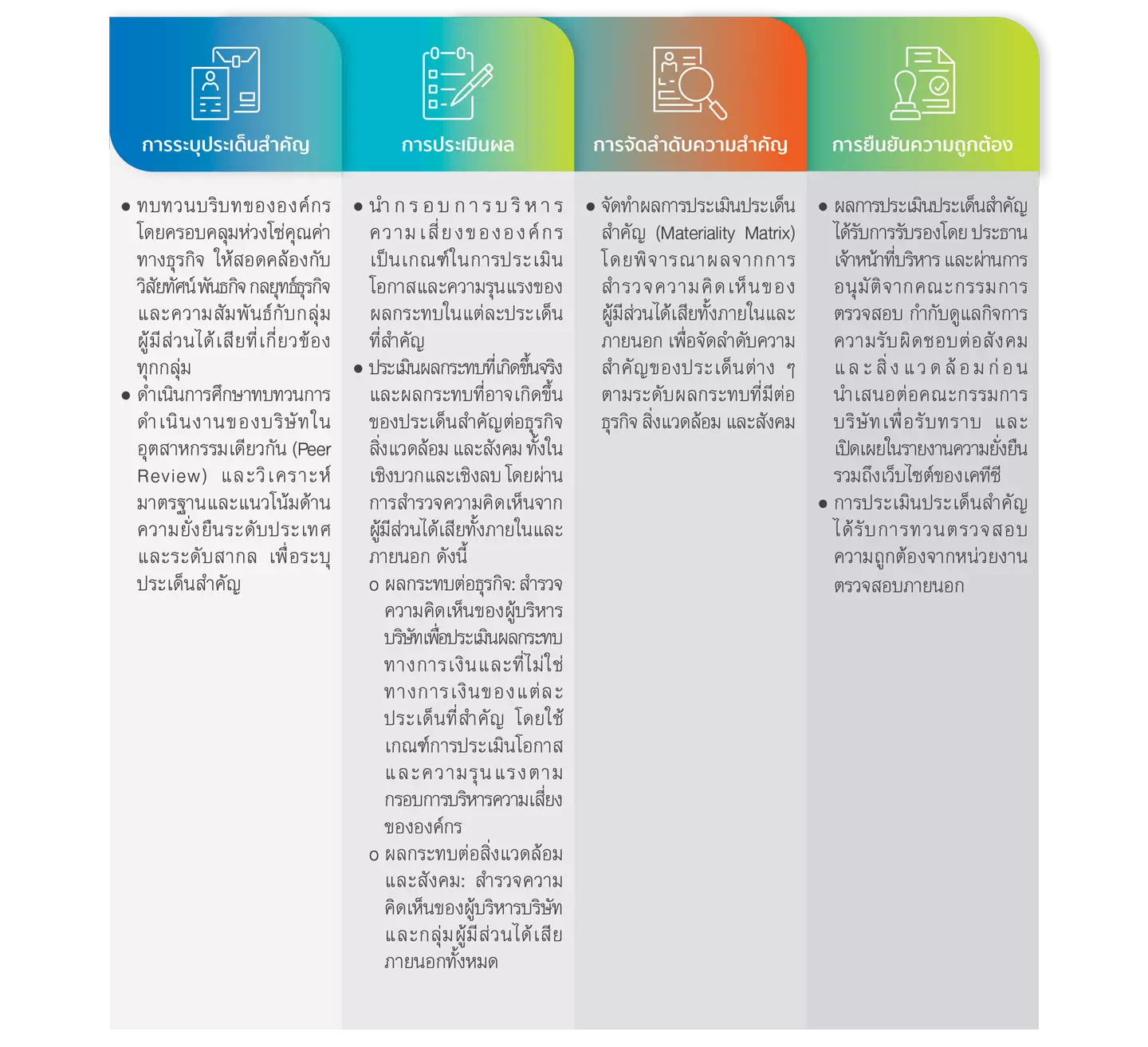
Materiality Issues
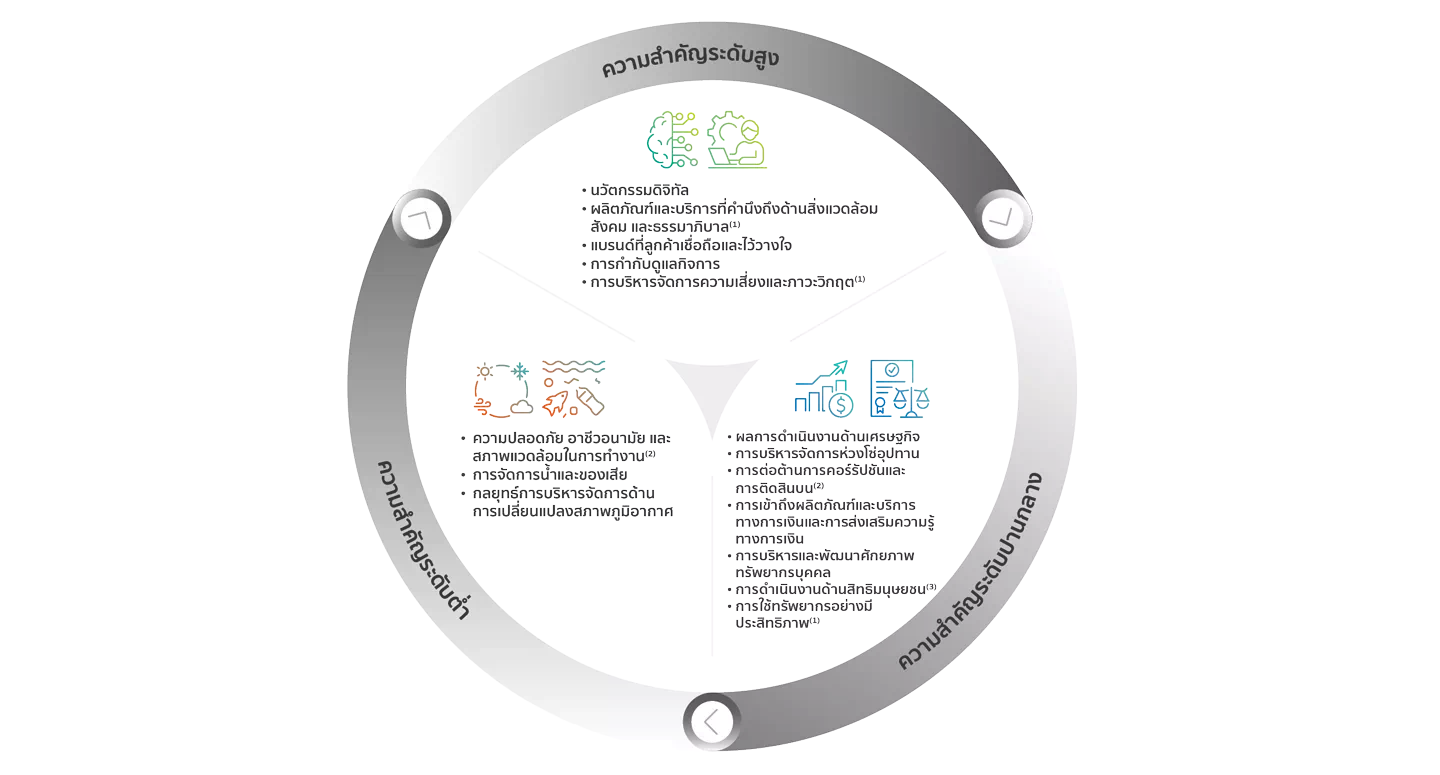
Remark
- (1) Issues increased by one materiality level compared to the materiality assessment 2023
- (2) Issues decreased by one materiality level compared to the materiality assessment 2023
- (3) Previously included under Human Resource Management and Development in the Materiality Assessment 2023, this issue has been designated as a standalone issue in the Materiality Assessment 2024.
Material Issues Prioritization
Sustainable Development Framework
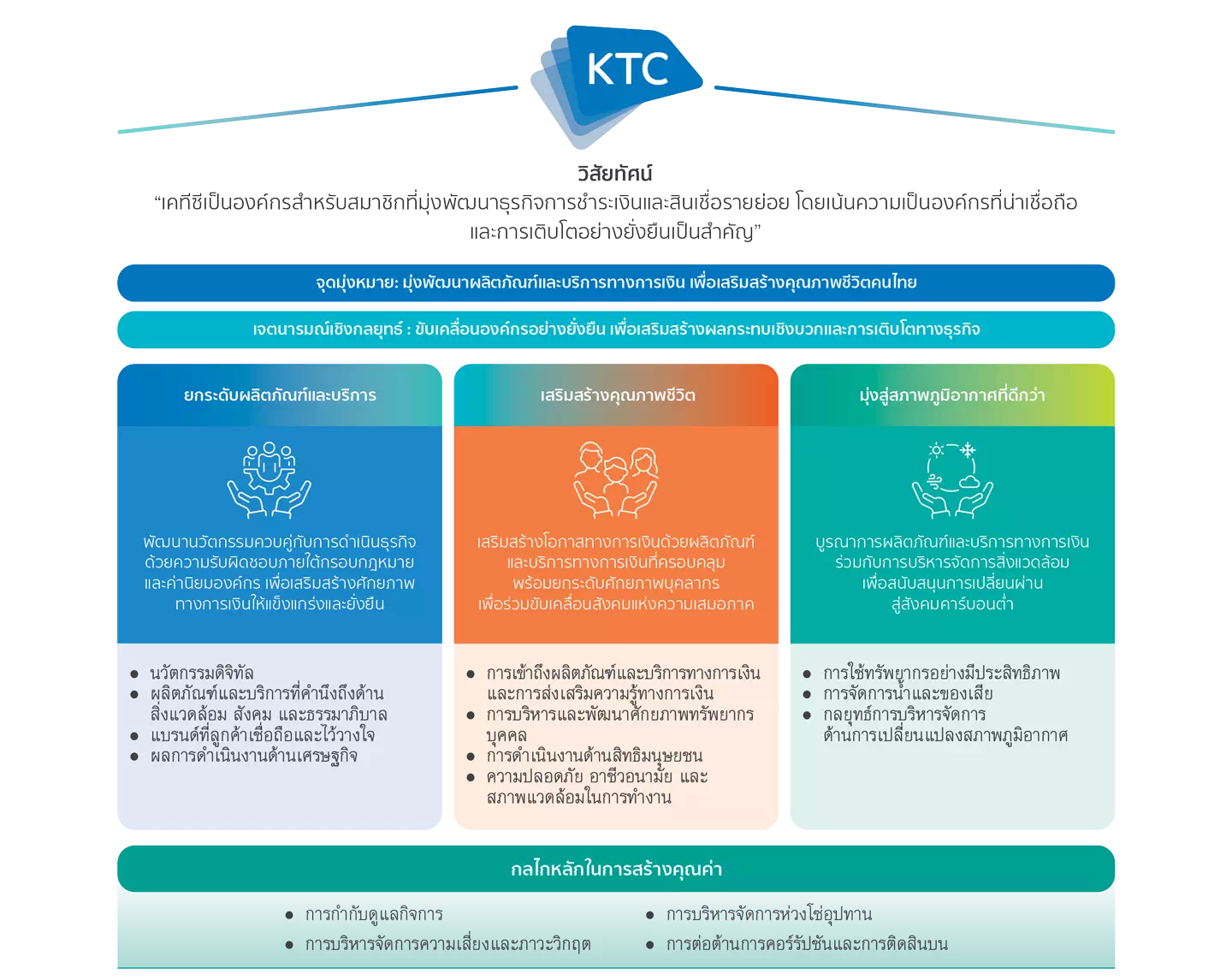
View Large Image